
Podcast overview with the author
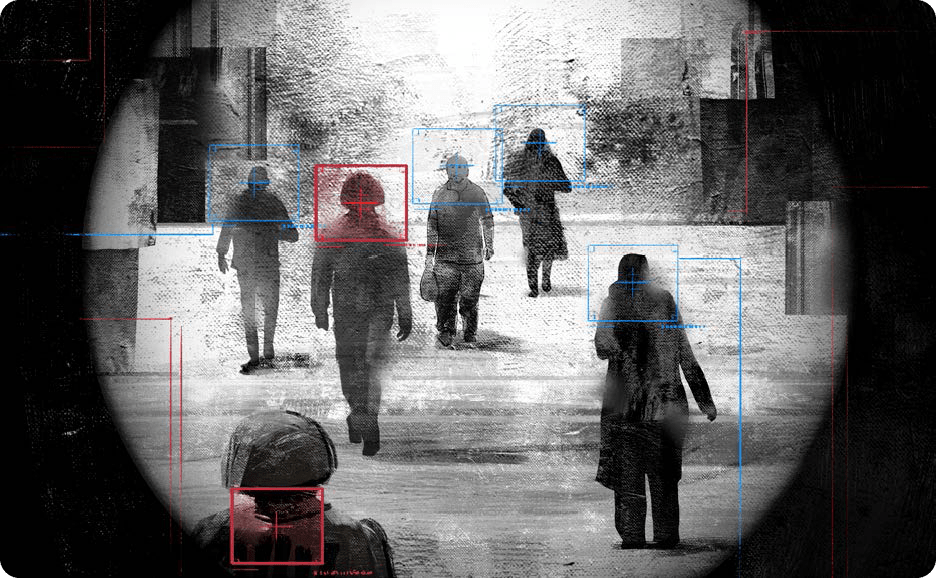
Militaries around the world are developing increasingly autonomous weapons systems. These efforts, however, have been met with staunch opposition from a number of groups.1 Critics object that “autonomous weapons would face great, if not insurmountable, difficulties in reliably distinguishing between lawful and unlawful targets as required by international humanitarian law.”2 One part of this objection argues that autonomous weapons system(s) (AWS) cannot recognize the subtle cues that can distinguish civilians from combatants, active combatants from those attempting to surrender, or active combatants from those who are out of action due to unconsciousness, wounds, or sickness (hors de combat).3 A second concern is that autonomous weapons may have certain features that render them unpredictable, making their use inherently indiscriminate.4 As a result, opponents charge, such weapons would be in breach of international humanitarian law (IHL) and the principle of distinction.5
These objections fundamentally mistake what is required under the principle of distinction, rely on inaccurate depictions of AWS, and misunderstand what IHL demands with regard to the use of these weapons. The core of the principle of distinction is not concerned with regulating weapons, but rather uses of weapons. Precautions in attack and the principle of proportionality both affect distinction in war, and the relevant question is not about the technology per se, but the conditions under which commanders are required to exercise greater care. The principle of distinction will indeed set bounds on how AWS may be used, and on when, where, and under what limitations they may be deployed, but it cannot underpin any blanket prohibitions for existing or near-future autonomous weapons.6 Autonomous weapons do create legitimate ethical and legal worries, but we must identify actual problems rather than chasing phantom concerns rooted in misunderstandings about technology and military operations
Laying the Groundwork: Autonomous Weapons Systems and International Law
To begin, a clear definition of autonomous weapon systems is necessary to avoid misunderstanding.7 The predominant view is that autonomous weapon systems are those that, once activated, are capable of selecting and engaging targets without contemporaneous human input. Variations of this view appear in definitions from the US Department of Defense, the International Committee of the Red Cross (ICRC), Human Rights Watch, and critics of AWS.8 This definition is broad, including not just futuristic systems but other mundane platforms that have existed for decades, such as the close-in weapon systems used by most navies around the world for missile interception. The ongoing Russo-Ukrainian war has also seen broad use of a variety of increasingly autonomous systems for numerous roles, underpinning the fact that AWS are not just systems of tomorrow, but of yesterday and today.9 Thus, under this expansive definition, not only would Terminators (from the science fiction films) count as AWS, but so would anti-radiation missiles, certain anti-armor weapons, autonomous point-defense systems, and many forms of loitering or self-guided munitions.10
Critics’ core objection to the use of AWS is that these weapons will not be able to reliably distinguish between lawful and unlawful targets because technical limitations in computer systems make them unable to exercise necessary human-level judgment. In addition, critics argue that some AWS are too unpredictable for their general use to comply with the precautionary demands of distinction. Fundamentally, this objection is aimed at the weapons themselves. The problem, say critics, is not simply poor operational choices or flawed military judgment, but that the fundamental technical character of AWS means that they cannot satisfy distinction, making their use indiscriminate and unlawful.11
Distinction in IHL
To assess the objection fully, a clear definition of distinction is critical. A core principle in IHL, distinction sets basic requirements for legal conduct in war.12 Aspects of distinction can be found in numerous treaties and throughout the Additional Protocols to the Geneva Conventions; in the ICRC’s study of customary IHL, nearly a third of the rules involve the concept.13 Distinction is often presented as a principle protecting civilians from attack and the effects of attack,14 but at a basic level, it demands that combatants distinguish between lawful and unlawful targets and direct their attacks only at the former. This language obviously implies protection for civilians, but it also incorporates protections for combatants who are surrendering or otherwise out of combat.
Civilians
The “basic rule” of distinction with regard to civilians is embodied in Article 48 of Geneva Protocol I Additional to the Geneva Conventions (AP I), which states:
In order to ensure respect for and protection of the civilian population and civilian objects, the Parties to the conflict shall at all times distinguish between the civilian population and combatants and between civilian objects and military objectives and accordingly shall direct their operations only against military objectives.
This rule is, according to the ICRC Commentary on the Additional Protocols, “the foundation on which the codification of the laws and customs of war rests,”15 and is given substance and force throughout Part IV of AP I.
Articles 51 and 57 are particularly relevant to the use of autonomous weapons in war. Article 51 makes clear that “the civilian population and individual civilians shall enjoy general protection against dangers arising from military operations” (AP I, Art. 51.1), and that they “shall not be the object of attack” (AP I, Art. 51.2). Most importantly for our purposes, the rule prohibits indiscriminate attacks, defined as:
(a) those which are not directed at a specific military objective;
(b) those which employ a method or means of combat which cannot be directed at a specific military objective; or
(c) those which employ a method or means of combat the effects of which cannot be limited as required by this Protocol;
and consequently, in each such case, are of a nature to strike military objectives and civilians or civilian objects without distinction. (AP I, Art. 51.4)16
The definition of indiscriminate attacks moreover includes a proportionality condition. The definition treats as indiscriminate any “attack which may be expected to cause incidental loss of civilian life, injury to civilians, damage to civilian objects, or a combination thereof, which would be excessive in relation to the concrete and direct military advantage anticipated” (AP I, Art. 51.5.a).
Article 57 adds precautionary standards that must be met for an attack to be lawful. It stipulates that “constant care shall be taken to spare the civilian population, civilians and civilian objects” (AP I, Art. 57.1). This addition, in turn, requires that combatants “do everything feasible to verify that the objectives to be attacked are neither civilians nor civilian objects”; choose their “means and methods of attack with a view to avoiding, and in any event to minimizing, incidental loss of civilian life, injury to civilians and damage to civilian objects”; and refrain from launching attacks “which may be expected to cause incidental loss of civilian life, injury to civilians, damage to civilian objects, or a combination thereof, which would be excessive in relation to the concrete and direct military advantage anticipated” (AP I, Art. 57.2).
Importantly, none of these legal requirements rule out attacks that are expected to harm civilians, nor do any other rules of international law. Rather, civilians are protected from being directly targeted in attacks, attackers are required to take precautions minimizing expected harm to civilians, and attacks expected to cause disproportionate harm to civilians are prohibited. Additionally, combatants are prohibited from using methods or means that cannot be used in a discriminate manner. These requirements, however, still permit combatants to carry out attacks that may harm civilians, so long as the above restrictions are satisfied. Combatants are indeed permitted to carry out such attacks in full knowledge that civilians will be harmed, so long as the target being attacked is a military one, civilian harm is minimized to the extent possible, and civilian harm is proportionate to the military advantage gained.
Persons Hors de Combat
The principle of distinction applies to enemy personnel as well as civilians. In particular, IHL prohibits attacks on those who should be recognized to be hors de combat, which applies to an individual when:
(a) he is in the power of an adverse Party;
(b) he clearly expresses an intention to surrender; or
(c) he has been rendered unconscious or is otherwise incapacitated by wounds or sickness, and therefore is incapable of defending himself; provided that in any of these cases he abstains from any hostile act and does not attempt to escape. (AP I, Art. 41.2)17
Distinction thus extends protections to those who are regularly combatants, but are temporarily noncombatants either by virtue of their own actions (surrendering persons), by their inability to fight (incapacitated persons), or because they have been taken into custody after surrender or retrieval by enemy forces (detained persons).18 Importantly, Article 41 also does not merely protect those who are seen to hold hors de combat status, but rather extends to those who “should be recognized to be hors de combat” (AP I, Art. 41.1). It is thus irrelevant whether a given combatant believes some enemy individual is hors de combat—the question is whether the enemy “should be recognized” to hold that status. To answer that question, combatants (or combat systems) must be able to recognize and respond to expressed intentions to surrender. Those carrying out attacks must also either be able to recognize when an enemy is incapacitated, or be limited in such a way that they cannot carry out attacks unless an enemy is clearly not incapacitated.19
The Demands of Distinction in Practice
At a basic level, following distinction would seem to be straightforward. Combatants usually wear uniforms and carry arms openly, and military equipment and vehicles are often unmistakable. In contemporary conflict, however, a number of factors complicate the assessment: fighters may not be wearing distinctive dress, civilian vehicles or buildings may share similarities with military variants,20 and some noncombatants protected from attack include members of the armed forces (for example, chaplains, medical personnel, and those hors de combat).21 How then does distinction work in practice? And what implications does that process have for autonomous weapons systems?
To begin with, it is helpful to separate the discussion between international armed conflicts (IAC) and non-international armed conflicts (NIAC). The main relevant difference between these forms of warfare with regard to distinction and AWS is the extent to which individuals engaged in hostilities and military equipment are clearly recognizable and distinct from civilian individuals and objects.22 In what follows, IAC will be understood as armed conflict in which the armed forces of belligerent parties wear a distinctive combat dress, fly the colors of their party, and otherwise demonstrate in a clear and obvious fashion that they are combatants regularly engaged in warfighting purposes. By contrast, NIAC include conflicts where one or more parties have fighters who are not easily distinguishable from the civilian population; they may be civilians who take up arms at particular moments, or fighters who intentionally eschew recognizable emblems. In other instances, there may not be clear combat dress (for example, combatants forced to wear civilian clothes because there are no uniforms to be had). These factors do not constitute the whole of what distinguishes IAC from NIAC, nor do they map cleanly to all instances of these types of conflict—as some IAC involve non-uniformed combatants and some NIAC are between clearly recognizable combatant groups23—but these categories capture core differences that are nonetheless relevant for autonomous weapons’ compliance with the principle of distinction.24
Distinction in International Armed Conflict
In international armed conflicts (IAC) between peer adversaries, attritional fighting directed at materiel often plays a central role; this type of operation, in turn, impacts how combatants satisfy the distinction principle. When the aim is to destroy vehicles or equipment, the primary element of distinction can often be satisfied through a simple object recognition exercise:25 Is this a tank, jet fighter, ammunition depot, bunker, or the like?26 Most cases permit an attack on such an object. Distinction still demands that combatants ensure that potential risks to civilians in the vicinity are minimized, and that expected harms to civilians are not excessive. But the core of distinction—the act of distinguishing between legitimate and illegitimate targets—is a rather straightforward exercise in object recognition.27
IAC therefore open a wide space in which autonomous weapons can be used in a legal and ethical manner. Autonomous weapons in anti-materiel roles need only be able to reliably recognize the signatures of particular enemy platforms. Thus, anti-radiation missiles that lock onto radio signatures, anti-tank weapons that utilize high-frequency radar to locate and engage armored vehicles, anti-missile systems that take the speed and heading of aircraft as targeting parameters, or other similar systems are all predictable ways for AWS to select, track, and engage targets.28 As long as these systems are reliable, their failure to hit the right targets (due to the presence of civilian objects matching the weapon’s target profile) will also be fairly predictable.
For example, if certain anti-tank AWS are utilized in an area with civilian heavy-construction vehicles, some of these latter objects may be engaged by an autonomous weapon owing to how it makes its target selections.29 Yet this outcome does not put the autonomous weapon itself in breach of distinction. Rather, it indicates that particular usages may be in breach, given the risks to civilians who may be expected to be in the AWS’ area of operations. Whether the usage of that AWS leads to a breach is also not a foregone conclusion. For example, destroying enemy armor in the region may be a militarily critical objective, the AWS may be the most discriminate weapon available for destroying that armor, and the risk to civilians, while real, may not outweigh the military advantage gained. In short, the demands of distinction will be contextual and nuanced, and the mere possibility of mistargeting civilian objects will not render the use of a particular AWS in breach of IHL.30 Anti-materiel systems have limitations that make mistargeting possible in certain circumstances, but this quality does not undermine the overall legality of such weapons. Rather, these possible uses highlight the need for combatants to exercise good judgment in their choice of means and methods of attack, with a view to minimizing risks to civilians.
“In short, the demands of distinction will be contextual and nuanced, and the mere possibility of mistargeting civilian objects will not render the use of a particular AWS in breach of IHL.”
In addition to the destruction of equipment, warfare often necessitates the neutralization of enemy combatants.31 In IAC, where combatants wear distinctive combat dress, the primary duty to distinguish between combatants and civilians is generally simplified.32 This type of scenario means that autonomous weapon systems would need to be able to competently determine whether some article of clothing matches an enemy uniform, or at least be able to make a determination at a level comparable to that of a human combatant in a similar situation.33 Machines already possess such capability,34 so the primary demand of distinction can be satisfied by an AWS. Moreover, even if some particular AWS is less capable, whether its use violates distinction depends on whether or not the attack for which it is used is one where civilians are expected to be present, whether civilians are expected to be mistakenly targeted, whether civilian harms could not be mitigated through the use of another weapon, and whether civilian harms are excessive in comparison to the military advantage gained.
Two other categories that present potential problems for distinction are surrendering combatants and combatants rendered hors de combat due to sickness, wounds, or incapacitation. Critics argue that AWS will be incapable of recognizing or respecting combatants’ attempts to surrender, thereby breaching distinction.35 Many of these objections rely, either implicitly or explicitly, on the understanding that “differentiating between combatants and noncombatants will often require the appropriate attribution of mental states (such as intentions),” something that machines cannot (yet) do.36 This assumption, however, is in error.
In the letter of international law, a combatant is not to be targeted when he or she “clearly expresses an intention to surrender” (AP I, Art. 41.2.b). The requirement is that a surrendering combatant needs to clearly express that intention; the opposing side does not have the responsibility to divine the secret intentions of their enemies, or to ascertain the mental states of those they are fighting. According to the ICRC’s Commentary on the Additional Protocols, combatants wishing to surrender may carry out any number of internationally recognized actions: They may lay down arms and raise their hands, they may hoist a white flag, or they may verbally communicate their wish to surrender.37 Even aircraft and ships at sea can signal surrender by, respectively, waggling their wings and lowering flags.38 In any of these cases, it is the responsibility of surrendering combatants to make their intentions clear. Critically, recognized gestures of surrender constitute, or are accompanied by, deeds that actually strip the surrendering combatant of their ability to harm their enemies; that is, if one continues to fight, simultaneously raising a white flag or shouting “I surrender” does not automatically protect one from attack.39 These patterns—such as the laying down of arms and raising of hands—can be reliably recognized by machines; in fact, some have already been integrated into existing autonomous platforms.40
A second potential problem of distinction in IAC involves soldiers who are hors de combat.41 International law makes clear that persons who “should be recognized to be hors de combat” due to incapacitation shall not be made objects of attack. Recognizing whether one is incapacitated, however, can be difficult, especially in the fog of war and under rapidly changing circumstances, and will be highly contingent on who is making the assessment. For example, the infantrymen clearing a trenchwork have very different information than the helicopter crew providing close combat air support—differences in context and access to information that will impact legal assessments. Infantrymen clearing positions will likely be in a better position to determine whether or not enemies really are hors de combat, or should be recognized to be such; as a result, these soldiers will be required to not make certain wounded enemies the object of attack. Pilots, artillerymen, or other remote fighters will likely not possess such knowledge of the situation and will not be in a position to as reliably recognize wounded or incapacitated enemies as hors de combat—nor will they be required to. Put bluntly, just because a certain method or means of attack makes it difficult to determine an enemy’s status does not ipso facto render that method or means illegal.
One may object that those who seem to be clearly incapacitated—for example, bleeding profusely, screaming in pain, holding body parts rather than weapons—obviously should be recognized to be hors de combat, regardless of who might be engaging them. An enemy missing a limb and lacking weapons can, arguably, hardly be anything but hors de combat. This objection, however, still ignores a critical point on the realities of war, and misses an important aspect of how actions in war are judged and what sorts of evidence are taken into consideration when applying the principle of distinction.
The central element in IHL is not that an individual is wounded or otherwise harmed, but rather whether an individual “therefore is incapable of defending himself.”42 A wounded enemy who continues to fight remains targetable until he or she either lays down arms and surrenders, or is rendered unconscious or otherwise incapacitated. The mere fact of being wounded, even to an extreme degree, does not automatically render one hors de combat.43
Second, IHL holds that “commanders and personnel should be evaluated based on information reasonably available at the time of decision.”44 This stipulation is known as the “Rendulic Rule,” and it was established out of the judgments reached in United States of America vs. Wilhelm List, et al., commonly known as “The Hostages Case.” The core of this rule is that an individual “planning, authorizing, or executing military action shall only be judged on the basis of that person’s assessment of the information reasonably available to the person at the time the person planned, authorized, or executed the action.”45 What this means, in practice, is that different combatants will be held to different standards due to their access to differing sets of information, and, more importantly, due to how readily information even can be gathered in practice.
To return to the previous example, the infantryman clearing a trenchwork will have more direct access to clearer evidence on the status of enemy combatants. He or she is also in a position to gain clear evidence by, for example, hearing screams or looking directly at enemy combatants before firing on them. This scenario places such a combatant in a stronger position to more easily determine whether enemies should be judged to be hors de combat. Aerial combatants (or other remote fighters), on the other hand, will not have these abilities; fast-flying fighter aircraft repeatedly strafing enemy positions will have virtually no ability to determine whether initial attacks have left wounded soldiers who ought no longer to be targeted.
Under Article 15 of Geneva Convention I, combatants are required to, “without delay, take all possible measures to search for and collect the wounded and sick,” a point that may seem to argue against repeatedly strafing enemy positions from the air. Yet even this seemingly strict demand “will require different kinds and levels of care” that take into account the realities of combat and the possibility for combatants to reasonably carry out such actions. The “relevant point of reference is what would be expected of a reasonable commander under the given circumstances,” and “this does not mean . . . that Parties must search actively for the wounded and sick at all times, as that would be unrealistic.”46 In short, combatants are prohibited from attacking those who should be recognized to be hors de combat, and they are under a positive duty to determine that status to the extent possible, but these rules are limited by the evidence they can reasonably be expected to have, given the circumstances of their fighting.
With regard to autonomous weapons, the exact type of AWS in question will greatly impact what standards of care regulate its use, and what can reasonably be expected regarding determinations of hors de combat status. In general, an AWS’s distance from the fighting and its sensor apparatuses will dictate to what extent it can recognize when someone should be deemed to be hors de combat. These factors will inform where, when, and how a combatant may permissibly deploy such systems. As optics, image recognition, and data analysis technologies improve, the ability of AWS to make reliable determinations of an enemy’s wounds and attendant capacity to defend themselves will likewise improve. Even for those AWS with highly limited systems, however, distinction will not necessarily rule out their use entirely. Instead, the demands of military necessity will have to be balanced against the limits set by proportionality, which will, at most, rule out an AWS’s use on a case-by-case basis.47
“For some missions, significant risks cannot be justified, and so limited systems cannot be utilized.”
The question will not be whether a system is too limited to be used at all, but rather what limitations a system has (because all systems have limitations) and what risks those limitations entail. For some missions, significant risks cannot be justified, and so limited systems cannot be utilized. But for critical endeavors where tactical failure could lead to operational or even strategic calamity,48 it remains possible that highly limited systems may be permissibly used, despite the risks they bring.49
Distinction in Non-International Armed Conflict
As discussed above, non-international armed conflicts (NIAC) can be loosely characterized as warfare involving one or more parties whose fighters and military assets are not easily distinguishable from civilian persons and objects. This difference places responsibilities on combatants who might be targeted as well as those doing the targeting.
Importantly, “in order to promote the protection of the civilian population from the effects of hostilities, combatants are obliged to distinguish themselves from the civilian population while they are engaged in an attack or in a military operation preparatory to an attack” (AP I, Art. 44.3). In other words, individuals legitimately participating in combat are required to make themselves distinct in some fashion, even when they lack clear combat dress.
This requirement is a critical corollary to the core demand of distinction presented in Article 48 of AP I—namely, the act of distinguishing between military and civilian targets. One cannot make such distinctions unless visible markings designate relevant persons and objects as military ones.50 International law nonetheless recognizes that in some instances, irregular combatants may be incapable of properly distinguishing themselves; in such cases, these fighters are required to carry arms openly during military engagements and when visible to enemies prior to such engagements (AP I, Art. 44.3).51
Whether irregular combatants are acting lawfully or not, NIAC present unique challenges of distinction for both human fighters and autonomous systems deployed to such environments. The core difficulty is the elementary act of distinguishing military persons and objects from civilian ones. This problem is exacerbated by the fact that many instances of NIAC take place in circumstances where civilians may, of necessity, also need to be regularly armed. In failed states or civil conflicts, combatants and civilians may look the same and carry the same arms. Distinction thus seems different from the object recognition exercise in IAC, and appears to present a unique difficulty for autonomous weapons systems.
This assumption, however, is too quick. It is true that civilians and irregular fighters in NIAC may be practically indistinguishable, and under international law, “in case of doubt whether a person is a civilian, that person shall be considered to be a civilian” (AP I, Art. 50.1).52 This point would appear to undermine any lawful targeting of individuals within such conflicts. Even if we assume that every individual is actually a civilian, however, they are only protected “unless and for such time as they take a direct part in hostilities” (AP II, Art. 13.3). Thus, civilians’ immunity from being objects of attack “is subject to an overriding condition, namely, on their abstaining from all hostile acts.”53 In practice, this requirement implies that civilians may be targeted in NIAC when they are directly participating in hostilities, especially through acts of violence adversely affecting the military operations of a party to the conflict.54 This situation holds whether individuals are regularly engaged as combatants or are regularly civilians who are only currently taking a direct part in hostilities; participation in hostilities makes one a legitimate target for as long as one is so engaged.55
With regards to AWS, distinguishing between fighters and civilians will likely be practically impossible when no fighting is occurring. However, this inability remains the case for human combatants in such environments as well. When confronted with non-uniformed individuals lacking any distinctive signs or emblems, what distinction often demands is that one withhold fire until such individuals carry out violent actions that either threaten human combatants, friendly personnel, or civilians, or that amount to direct participation in hostilities. In other words, doubt about individuals’ status is expected to be common, and such individuals should be treated as civilians unless and until such time as they directly participate in hostilities, at which point direct participation becomes grounds for lawful targeting.
One significant challenge, however, is that civilian participation is not always evident to observers, or amenable to object recognition. Serving as a lookout, calling in mortar strikes using a mobile phone, carrying supplies to combat units, and laying improvised explosive devices can all rise to the level of direct participation in hostilities, yet can be hard to detect. When in doubt, individuals are to be treated as civilians. A conservative targeting program would treat all such individuals as civilians until presented with conclusive evidence of direct participation.56
Despite these challenging cases, other modalities of direct participation can be determined largely by object recognition or algorithmic processing.57 The key questions will often be whether an individual is armed, and if so, whether they are using their arms in a manner that permits their being targeted (for example, directing their weapons toward friendly combatants or those protected from attack).58 Both of these questions are amenable to object recognition tasks. Moreover, targeting based on positive identification of these elements is unlikely to result in targeting individuals who would otherwise be protected from attack under IHL.59
It may still be the case that certain AWS cannot be deployed to specific environments, simply because they cannot carry out these sorts of object recognition tasks. But the conclusion then should not be that AWS in general are in breach of the principle of distinction. Rather, it should be that deploying this or that specific AWS to this or that specific operational environment would be in breach. Context will determine the legality of a system’s deployment, and broad conclusions drawn at an abstract level are unlikely to be sustainable.
Precautions and Proportionality
AWS may present specific challenges in particular contexts, but autonomous weapons are not subject to some general objection based on the principle of distinction. Nearly every operation will have areas where autonomous weapons may be reasonably and legally deployed, as well as areas where their deployment would be almost certain to constitute a breach of IHL. If we turn our attention to the role that precautions and proportionality play in the principle of distinction, we will see that AWS deployment is not only sometimes permissible, but in certain instances required.60
The core of distinction is that civilians “shall not be the object of attack” (AP I, Art. 51.2). This prohibition does not imply that attacks expected to harm civilians are automatically prohibited. Rather, combatants are required to take all feasible precautions to minimize harm to civilians (AP I, Art. 57.2.a.ii), and are prohibited from carrying out attacks expected to cause civilian harms disproportionate to the concrete and direct military advantages gained (AP I, Art. 57.2.a.iii). Such limitations correspond to the in bello moral principles of necessity and proportionality. The latter asks, “Is this level of civilian harm acceptable, given these military outcomes?”; the former asks, “Could we reduce this harm?”
To see what distinction requires with regard to AWS and the choice of weapons and means, let us consider a hypothetical example.
Urban HQ: An enemy command center is located in an urban environment. Most of the personnel inside are military individuals, but there are usually between five and ten civilians as well (custodial workers, secretaries, and so forth). The command center is also adjacent to an office building that, during office hours, contains a few dozen workers. The command center is a core node of enemy command and control containing numerous high-value targets, and its destruction presents an advantage that is significant, concrete, and direct.
The importance of the command center justifies some amount of collateral harm to civilians resulting from attacks on the building. For concreteness, let us suppose that up to twenty civilian deaths would be permissible on grounds of proportionality.61 Given that usually no more than ten civilians are in the building, any attack destroying the whole structure would be permissible (again, purely on grounds of proportionality). Let us further suppose that the attacker has two weapons that they could deploy: a precision-guided bomb and a medium-sophistication autonomous anti-personnel drone. The AWS drone is a small quadcopter armed with a firearm and outfitted with object-recognition software capable of identifying people wearing combat dress with high reliability, and of identifying when humans are carrying weapons with medium reliability.
If the bomb is dropped, it is expected to destroy the entire building, killing everyone inside, and posing some small risk to workers in the adjacent building (small enough that proportionality is still satisfied). The AWS, on the other hand, is expected to kill every soldier inside, by virtue of recognizing their combat dress, and is expected to target between three and five civilians as well. This outcome is expected because the AWS is known to make object recognition mistakes, such as individuals holding objects with long hafts such as mops or brooms being mistakenly identified as holding rifles, and individuals holding telephone receivers being mistakenly identified as holding pistols. These limitations make it likely that the AWS will mistakenly engage some civilians, especially janitorial and secretarial staff, because it explicitly targets them—a fact the potential deployer of the AWS knows.
“If use of the autonomous drone is indeed in breach of IHL (because we expect it to make these targeting mistakes), who is responsible?”
Does the mistaken targeting indicate that the AWS fails distinction? One may think to argue that it does; due to a limitation in its software or hardware, the weapon identifies a civilian as a combatant, targeting that individual with lethal force. However, this conclusion mistakes where the locus of distinction lies: Distinction is first and foremost concerned with attacks, not weapons. In forbidding indiscriminate attacks, Article 51 of AP I does maintain that the use of methods or means of combat that cannot be directed at military objectives (or whose effects cannot be so directed) constitute indiscriminate attacks. In the above example, however, the autonomous drone is directed at a military objective: the command center. The combatant contemplating deploying the drone knows that due to limitations in its capabilities, some number of civilians are likely to be mistakenly killed. Due to limitations in the capabilities of large explosives, however, a precision-guided bomb applied to the same target is likely to kill more.
One may object that even though civilians will die when either the bomb or the AWS is used, the potential violation is not the same; the bomb does not violate distinction,62 but may violate proportionality. By contrast, the deployment of the drone, while improving proportionality, might seem to violate distinction. The underlying objection is that when the AWS is used, civilians are not incidentally dying because they happen to be near a military objective, but are being specifically (mistakenly) targeted, and that this is a basic breach of distinction.
This objection, however, cannot be sustained. If use of the autonomous drone is indeed in breach of IHL (because we expect it to make these targeting mistakes), who is responsible? Who has violated IHL, when did they violate IHL, and what grouping of action and intent constituted the breach?63 One may argue that the breach occurs at the moment of deployment—that in utilizing a weapon that cannot adequately distinguish between civilians and combatants, the combatant deploying the AWS fails in his or her duties. However, this interpretation would be incorrect; the combatant utilizes a means of attack (the drone), which can be and is directed at a military objective.64 And if the failure of distinction is because the weapon cannot adequately distinguish between civilians and combatants, that quality is even more true of the precision-guided bomb. Bombs have absolutely no capacity to distinguish, and it is combatants who must therefore ensure that civilians are not targeted. Critically, in neither case is the combatant targeting civilians; he or she is targeting a command center, utilizing a means directed at that target.
One might instead argue that a breach occurs at the moment a civilian is mistakenly targeted. This objection, however, runs afoul of similar responses to those just presented. In particular, if we assume a breach occurs at that moment, who is committing the breach? The combatant has utilized a means of combat that can be directed at a military objective, which is expected to bring incidental civilian harms but ones that remain within the limits set by proportionality. Moreover, the combatant’s intent is the same whether deploying the bomb or the AWS; in each instance he or she is targeting a command center, in the knowledge that civilians inside will likely be harmed.
One could shift the responsibility to the AWS itself, but this is philosophically awkward at best, and arguably simply wrong. The AWS is not highly sophisticated, and is certainly not an agent. What the AWS does is predictable for the combatant deploying it, and so can be traced back to that individual’s choices and intent. This characteristic returns us to the choice a combatant faces between means of neutralizing a command center. The command center is the target, the AWS can be directed at that specific military objective, and its effects can also be so directed. Moreover, the AWS can be more tightly directed at that objective than the bomb can, and its effects can also be more tightly directed than the bomb’s.
Any breach of distinction must be traceable to the combatant and his or her choices, but the combatant is deciding here between means of attack, both of which can be directed against a military objective. To argue that the decision to use the AWS somehow violates distinction requires reasoning that applies to the decision to use the bomb as well. However uncomfortable this fact may often be, IHL explicitly allows for incidental civilian casualties, even ones that are wholly expectable, so long as these are within the bounds set by proportionality.65
The concept of an “attack” in IHL also provides a general rebuttal to the above objection. Article 49 of AP I states that “‘attacks’ means acts of violence against the adversary, whether in offence or in defence” (AP I, Art. 49.1). Whether or not that violence is kinetic,66 the concept of “attacks” presumes an act of violence, requiring actors or agents. Yet AWS are not actors or agents. AWS therefore do not and cannot carry out “acts.” Instead, they “execute processes” on combatants’ behalf.67 As such, an AWS cannot attack (in the legal or philosophical sense) during its deployment, as it is not an entity capable of making choices or acting; it executes processes. The actors present in any deployment of a fully autonomous weapon system are the human combatants making the decisions and carrying them out. After the moment of deployment, everything that follows is the execution of a process, fundamentally akin to the way a guided missile follows its programming or an artillery shell follows the trajectory set by its initial firing position. In either of those latter cases, unexpected and unforeseeable drifts may be introduced after launch, but the missile or shell is not “deciding” where to hit. Rather, the weapon is following set programs or processes.68
Even for more advanced AI-enabled AWS that can select targets based on open engagement criteria or machine learning, these systems also will not rise to the level of “making decisions” or being “agentic” (in a philosophical or legal sense). Such systems are only ever executing processes—sometimes deterministically, sometimes with a stochastic spread—and though the introduction of probabilistic processes complicates the predictability of such systems, this characteristic does not make them unpredictable in a fundamental or total way. Engagement parameters, system design, or ordnance choices represent just a few of the many ways in which humans can make a system’s operation more predictable, even granting some unpredictability due to AI-enabled processes.69 Remaining unpredictability will also not present a fundamental obstacle for IHL compliance. Distinction, proportionality, and precautions in attack will tell combatants how their levels of confidence in a machine’s reliability will impact on the permissibility of discrete deployments, with less predictable systems seeing fewer permissible deployments. The question is thus not whether a system is predictable, simpliciter, but whether it is predictable enough for a particular mission.70
Basic concerns over the minimization of harm further favor the AWS. Combatants are required to “take all feasible precautions in the choice of means and methods of attack with a view to avoiding, and in any event to minimizing, incidental loss of civilian life, injury to civilians and damage to civilian objects” (AP I, Art. 57.2.a.ii). Although the AWS in the above example is expected to kill some civilians, the bomb is expected to kill all civilians within the building. If the bomb’s use is in accordance with proportionality considerations, the use of the AWS must be as well (since it would result in, at most, the same or a lesser number of civilian deaths, and indeed, the same civilian deaths). The AWS has the potential to be far less harmful to civilians, and is in fact expected to be; in this case, it would be illegal to opt for the more destructive alternative of destroying the entire building with everyone inside.71 The presence of the adjacent office building strengthens the case, as the bomb is not expected to but nonetheless could cause some damage to the structure, while a tightly geographically limited AWS would not.
AWS will not always be superior or free of risks. An AWS not subject to temporal and geographic limitations to its operation could present grave risks to large areas, and some AWS well suited to certain tasks may be utterly unacceptable in other roles. So long as AWS are reliable in their functioning, however, and combatants can make reasonable and defensible assessments concerning what is likely to follow from certain deployments, then there will be situations where the use of AWS is not just permitted, but obligatory.72 If it is permissible to use a bomb to get the job done, then it is hard to see why a bot would be out of line.
The Realities of AWS Development and Deployment
AWS come in a variety of shapes and sizes, tailored to a variety of operational goals, and are deployed in different ways to different theaters and domains (air, sea, land, space). All of these details undermine the blanket objection that autonomous weapons cannot or will not abide by the demands of distinction. Sometimes the systems will be used indiscriminately, following every other weapon in the history of war. But they will also be used in accordance with IHL, as many already have for decades.
This brings us to a further problem in the critics’ objection. When critics of AWS claim that “no autonomous robots or artificial intelligence systems have the necessary properties to enable discrimination between combatants and civilians,”73 or that “fully autonomous weapons would not have the ability to sense or interpret the difference between soldiers and civilians, especially in contemporary combat environments,”74 they betray a failure to grapple with the realities of AWS development and deployment.
The definition of AWS used here—weapons that “select and apply force to targets without human intervention”75—is one that critics also endorse.76 This definition captures a wide variety of systems under its umbrella, from anti-personnel drones to homing torpedoes, and point-defense systems to anti-radiation missiles. The vast majority of AWS currently in use and under development are expressly anti-materiel systems: weapons and ordnance designed to destroy tanks, aircraft, missiles, ships, or other militarily relevant objects. Many of these weapon systems need not make any hard calls of distinction about whether something is a military or civilian object. Military aircraft fly far faster than civilian airliners and have IFF (Identification, Friend or Foe) tags; combat naval vessels have no civilian counterparts for which they could be reasonably mistaken; and anti-missile or active protection systems target objects that can, by definition, only be hostile.
“More sophisticated weapons, even autonomous ones, do not change these responsibilities.”
It is true that certain anti-materiel AWS can mistakenly target civilian objects, as anti-radiation missiles may home in on civilian radar stations, and certain anti-tank weapons may mistakenly target heavy-construction or farming equipment. These limitations, however, do not mean that such systems are “inherently indiscriminate,” or that their use would automatically breach distinction. Rather, such limitations show that operators must know what risks to civilians are present in a particular environment when using particular weapons. But this is not new. When dropping bombs, firing artillery, or even firing rifle rounds, combatants are already required to take all feasible precautions to minimize risks to civilians. More sophisticated weapons, even autonomous ones, do not change these responsibilities. These obligations only demand that combatants understand their systems well enough to adequately judge the risks associated with those systems’ use, and employ them accordingly.
For any autonomous weapon system, the question thus is not whether it generally can or will act in a manner conforming to distinction. Rather, for each system, combatants will have to ask themselves multiple questions: What can this AWS reliably do? What is it expected to do poorly? What are its limitations, both technical and user-imposed? Do its reliable characteristics make it likely to target any civilian or otherwise unlawful targets? If so, in which situations and why?
The answers to these questions will not tell the combatant whether the AWS “satisfies distinction,” as weapons do not do this on their own. Instead, these answers will inform him or her about what particular uses or deployments of the AWS would be permitted on grounds of distinction. Put negatively, distinction, along with a clear eye to the limitations and expected failings of a particular autonomous system, will tell which uses or deployments would be indiscriminate and thus illegal.
Distinction does not decree that all high-yield bombs are “indiscriminate” by virtue of having massively destructive potential; it only tells us that certain uses of those weapons are indiscriminate. In the same way, AWS, even very primitive ones with little ability to distinguish combatants from civilians, will not be outlawed simply due to their limitations. Rather, the limitations in capability place limitations on the set of deployments legally permissible for those weapons. It is still the responsibility of men and women in military organizations to ensure that AWS are deployed according to their capabilities. Failure to do so is not a failure of the autonomous system; it is a failure of choosing the wrong weapon for a specific task in war.
Conclusion
A rifle does not discriminate. Nor does a hand grenade, an artillery shell, or a bomb. And importantly, they are not required to—IHL imposes obligations on belligerents, not their equipment. Distinguishing between legitimate and illegitimate targets is something that the combatants behind weapons do, and have done.
Yet we are now moving into an age where weapons increasingly can make distinctions. Sometimes these weapons will fail, and sometimes there will be situations where they cannot be expected to succeed. Even so, there are a host of cases where specific autonomous systems, despite their many limitations, can reliably distinguish between military targets and protected persons and objects, and in some cases already are doing so. The fact that AWS sometimes fail in this is not a mark against them as a category of weapon systems. Rather, the fact that they ever succeed is a significant achievement for both humanity and our hopes of a less bloody future of war. We therefore have a responsibility to ensure that deployments of AWS are conducted in accordance with the requirements of distinction—but this is no different from what is required when we deploy any other weapon, be it firing a missile, dropping a bomb, tossing a grenade, or aiming a rifle.
While certain deployments of AWS may satisfy distinction, others clearly will not, and the principle of distinction will thus outlaw these. Again, however, this is nothing novel; all weapons of war may be used in more or less discriminate ways. The capabilities and limitations of each individual autonomous system will determine what precautions and standards of care are required, and what sorts of deployment are permissible. In some cases, certain AWS will be inappropriate, but in other situations, autonomous weapons are likely to be superior, both morally and legally, to conventional alternatives. The context of an engagement is what determines which weapons may or may not be used. Weapons themselves are only legal, or not, in virtue of the evidence and information available to combatants who must decide how to proceed in war.
The International Committee of the Red Cross reminds us that, “unable to eliminate the scourge of war, one endeavors to master it and mitigate its effects.”77 Autonomous weapon systems bring many risks and concerns, but they also present an opportunity to, in specific cases, wage more discriminate forms of war—an opportunity to master and mitigate the scourges of war. We must act with caution and care as we explore the potential of these types of weapons, but we ought also to remember the possibilities they bring.
Nathan G. Wood is the junior research group leader for the “MilEth” project (Military Defense Technologies and Ethics) at the Institute of Air Transportation Systems of the Hamburg University of Technology. He is also an associate member of the Center for Environmental and Technology Ethics–Prague, and an external fellow of the Ethics + Emerging Sciences Group at California Polytechnic State University San Luis Obispo. His research focuses on the ethics and laws of war, especially as these relate to emerging technologies, autonomous weapon systems, outer space warfare, and other aspects of future conflict. He has previously published in Ethics and Information Technology, War on the Rocks, Philosophical Studies, The Journal of Military Ethics, and numerous other journals.
Hamburg University of Technology, Hamburg, Germany, email: wood.nathang@yahoo.com.
Acknowledgments: This article delves into deep questions of law and philosophy, and I am grateful to Isaac Taylor and Magdalena Pacholska for insightful feedback on both those fronts. I must also thank Kevin Jon Heller and Lena Trabucco for suggestions on a core (and controversial) contention I make relating to IHL; their feedback helped iron out the presentation to a great degree. My sincerest thanks go also to Jonathan Kwik and Maciek Zając, both of whom gave detailed and constructive criticism to the piece at critical stages. Finally, I must thank the two anonymous reviewers of this article and the entire editorial team at Texas National Security Review for numerous helpful suggestions and assistance in cleaning up the final manuscript for publication.
Funding: This work was partially supported by the Grantová agentura České republiky (Czech Science Foundation), under grant #24-12638I, and by the “MilEth” (Military Defense Technologies and Ethics) research project, funded by the Bundesministerium für Bildung und Forschung (German Federal Ministry of Education and Research) under grant #01UG2409A.
Image: US Army Transformation and Training Command by Luke Allen.78
© 2026 Nathan G. Wood